
Have you ever been on a website and found yourself completely lost and confused? If so, you are likely not the only one. Poor user experience (UX) can be a major hindrance to a website’s success. Some of the pit-falls of a bad UX include slow loading times, overwhelming menus, and cumbersome navigation.
There is nothing worse than a customer or client FINALLY finding your website in their search, only to be greeted by a wall of text, outdated layouts, and no clear direction.
What happens next?
They leave your website, without filling out a form, giving you a call, or pressing that magic button. They go to your competitor’s website instead and complete their desired task.
The digital landscape is ever-evolving, and businesses need to adapt to maintain relevance and competitiveness. One crucial aspect that plays a significant role in the success of any business is the website user experience (UX).
A positive UX can significantly boost your business performance by increasing customer engagement, improving conversion rates, and fostering customer loyalty.
C’mom, let’s be real for a minute. Put yourself in your customer/client’s shoes…would you go to your website and buy from you, or would you go to your top competitor’s website as well?
In this blog post, we’ll delve into eight easy ways that you can improve your website’s user experience, driving better results for your business. These methods are result-driven, backed by data, and tailored to suit the unique needs of small businesses. So, Buckle Up! because we’re about to dive into the nitty-gritty of enhancing your website’s user experience. And don’t worry, I promise to keep the jargon at bay.
1. Speed Up Your Website
Speeding up your website is much easier said than done, but it is vitally important that your website loads in mire seconds. And anything over 5 seconds is not fast enough for the search engine algorithms to be kind to you, thus dropping your search engine rankings very low (like page two or more low) – insert scary scream…

All joking aside, today’s internet users are impatient. A slow-loading website can be a major turn-off, leading potential customers to abandon your website and move on to your competitors. Therefore, optimizing your website’s speed should be a top priority and the reason why we made it number one on our list.
To assess your website’s speed, you can utilize tools such as Google PageSpeed Insights. If the performance falls short, you may want to consider implementing a few optimizations. Start by compressing your images to reduce their file sizes, minify your CSS, JavaScript, and HTML to eliminate any unnecessary code, and leverage browser caching to enhance loading times.
These measures will help speed up your website, providing a better user experience for your visitors.
2. Make Navigation Intuitive
Imagine walking into a store where everything’s scattered randomly and everything is difficult to find. Frustrating, right? The same goes for your website. If users can’t find what they’re looking for quickly, they’re outta there.
Poor navigation is a huge turnoff for people trying to find specific information. All the information your website contains should be found in the website’s menu, preferably in the header, and in a section on the homepage. If people have to make more than one click to get to the information they want to get to – they may get frustrated and leave your website prematurely.

Your website should be easy to navigate. Keep your navigation menu simple and straightforward. Use clear labels for your menu items, and make sure that important pages are easily accessible.
You may also want to revamp or redesign your homepage. That is the page most people see when they first visit your website, and it should be easy to understand. Make sure that visitors are quickly informed about who you are, what services you offer, how they can get in touch with you, and the most important information on your website.
3. Optimize for Mobile
Here’s a no-brainer: your website has to work well on mobile. This isn’t optional anymore, folks. With so many people browsing on their phones, a website that isn’t mobile-friendly is like a shop that doesn’t accept credit cards – outdated and inconvenient.
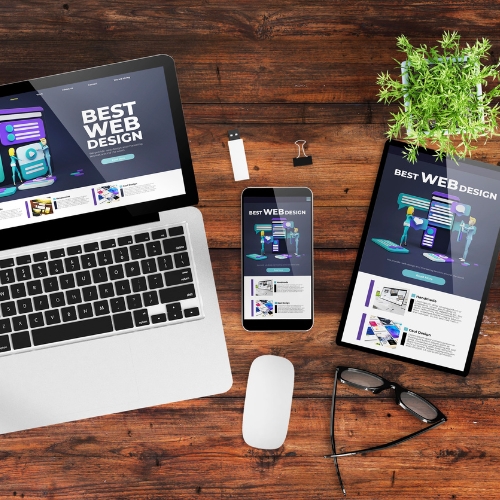
Ensure that your have responsive web design, meaning it automatically adjusts to fit the screen size of the device it’s being viewed on.
4. Use Clear and Compelling CTAs
Now, let’s talk about calls-to-action (CTAs). These are the signposts that guide your visitors on their journey through your site. CTAs need to be clear, concise, compelling and blatenly obvious. You literally need to tell your visitors what steps to take next—be it to download a resource, sign up for a newsletter, or make a purchase.

Calls-to-actions should also be in several different places on your website so that your visitors don’t need to scroll to the next section in order to take an action. They need to be conveniently placed and written in a way that is consistent with your brand’s voice. By having strong, easy-to-follow CTAs on your website, you can make sure users take the next step in their journey with you.
5. Invest In High-Quality Content
Content is king in the marketing world. It’s essential to create high-quality content that is engaging, informative, and tailored to your audience. By investing in quality content you can ensure that your website stands out and attracts the right kind of attention.
Make sure your content is well written, easy to read, attention-grabbing, and up-to-date with current trends. Additionally, make sure to optimize your content for search engines so that it is easier for users to find when searching online.

Investing in quality content will pay dividends in the long run as it helps build trust in your brand and encourages more visits from customers who are already familiar with your products or services. Having a strong content marketing strategy will help differentiate you from other businesses in your industry and set you apart as a leader in the field. Furthermore, creating content that is engaging and resonates with your target audience can help attract new customers and keep existing ones loyal.
So, make sure to invest in quality content to ensure your success!
6. Incorporate Visuals
A picture is worth a thousand words, they say, and I couldn’t agree more! Incorporating visuals into your website can help you stand out from the competition, provides an extra layer of engagement for your existing customers, and significantly enhances your website’s user experience.

Visuals can include anything from images to infographics, videos, and more – so let your creativity run wild! Using visuals also makes it easier for customers to understand complex concepts quickly, which is especially useful if they’re in a hurry or don’t have the time to read through long blocks of text.
7. Prioritize Accessibility
Inclusivity is key!
Investing in tools and technologies that ensure your website is accessible to everyone should be a top priority. Features such as closed captions, resizable fonts, and alt-text descriptions for images, and ensuring your website is navigable using a keyboard are just some of the ways you can make sure everyone is able to take advantage of all the content on your site. Accessibility also helps with SEO, so it’s ultimately a win-win!
8. Collect and Use Feedback
Last but not least, listen to your users. Feedback is key for understanding how people interact with your content and website. Collecting feedback can help you create a better experience, find out what works and what doesn’t, and determine the effectiveness of the content that you are creating.
Make sure to give users an easy way to provide their feedback through surveys or comment forms. You can also invest in some website recording tools such as Lucky Orange or Crazy Egg to get an even deeper understanding of user behavior. With this data, you can make adjustments and improvements to your website and content.

Collecting feedback is not just helpful for improving the user experience – it also helps you understand what appeals to your target audience so that you can create more engaging content that resonates with them.
This can provide valuable insights into what’s working and what’s not, allowing you to continually refine and improve your website’s user experience. The more feedback you receive, the better your understanding of your target audience’s preferences and needs.
The Bottom Line
A website or it’s user experience is never fully finished. As technology changes, and needs of your visitor’s change, so does the needs of your website.
By implementing these tips, you’ll be well on your way to providing a superior user experience that can help drive the success of your business. Remember, improving your website’s UX is an ongoing process, so always be on the lookout for ways to make your site better for your users.
Improving your website’s user experience is a crucial aspect of digital marketing that can yield significant benefits for your small business. By focusing on speed, navigation, mobile optimization, clear CTAs, high-quality content, visual elements, accessibility, and user feedback, you can create a website that not only attracts visitors but also keeps them engaged and encourages them to take action.
If these tasks seem daunting to you, Smart Blondes Marketing can help. We have a team of experienced UX professionals and digital marketing experts who can work with you to create an effective website that will wow your customers – and increase conversions, too!
Contact us today for more information on web design in West Palm Beach on how we can revolutionize the user experience of your website. Together, let’s make sure your small business drives maximum results from its web presence!